Volodymyr Meliukhov: Ukraine needs new European prisons with new staff oriented to European values
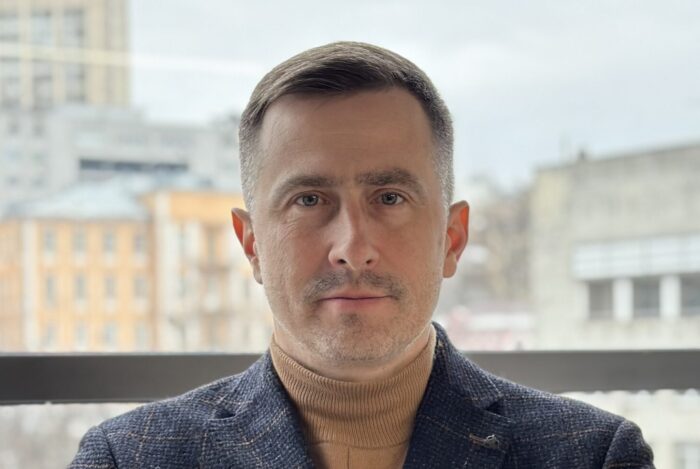
I am extremely pleased to present to the esteemed audience the opinions of a practitioner with extensive experience in the penitentiary service – opinions on the main problems of the penitentiary system and penitentiary reform. The penitentiary system and its reform are undoubtedly areas that do not tolerate abstract phrases about reform and require concrete steps based on practical experience and knowledge of law, psychology, sociology, economics and public administration. Therefore, the views of Volodymyr Meliukhov, former First Deputy Head of the Administration of the State Criminal-Executive Service of Ukraine, are more than interesting, and the answers are frank, for which we cannot but thank the respected expert.
D.Y.: Everyone traditionally associates the Ukrainian prison subculture with the “Gulag Past”. But almost a hundred years have passed since its creation. More than 30 years have passed since the collapse of the Soviet Union. Do the informal laws created in the Soviet prison system really exist in the same form in modern Ukraine as they did in Soviet times?
V.M.: We can say that yes and no at the same time. The outer framework of the set of informal laws of the prison subculture seems to have remained unchanged. However, if we look at them more closely through the prism of their content, we can already note their more than significant transformation.
For example, while it used to be unacceptable for a criminal authority or a convict seeking to achieve a more or less high criminal status (the so-called “vagrant” or “blatny“) to be released on parole, now we see a different trend, when this category of prisoners tries to get out on parole at all costs.

D.Y.: What is the informal hierarchy in modern Ukrainian penitentiary institutions? What informal groups does it consist of? Does the stereotypical idea of “wardens” and “inmates” in Ukrainian prisons remain in Ukrainian society?
V.M.: The informal hierarchy in modern Ukrainian penitentiary institutions has remained largely unchanged since the Soviet era.
At the top of the hierarchy are the so-called “smotryashchy” and “polozhentsi“.
They are followed by “blatnye” or “vagrants,” and then by “muzhyky,” which include the bulk of the convicts.
There is a separate caste of “goats” who include prisoners who cooperate with the prison administration.
At the bottom of the hierarchy are the “lowered” (“untouchables“), which include convicts who are rejected by the general prison population.
As for the stereotypical view, it should be noted that, unlike our northern “neighbor“, the so-called “criminal romance” is not so widespread in Ukrainian society, and the vast majority of people are not interested in it at all. And I think that this is very good for us, especially at the present stage.
D.Y.: Do they still drink chifir?
V.M.: The use of chifir by prisoners is now a very, very rare phenomenon. Unlike in Soviet times, when there were restrictions on prisoners receiving tea because of the widespread use of chifir, now tea is available in any quantity. I remember a conversation with one of the prisoners who started his prison career back in Soviet times, when he complained that nowadays prisoners are more aware and care about their own health, so they do not drink chifir because of its harm to the heart.
D.Y.: It’s no secret that in many European countries there is a lowest caste in prisons, which the ECHR and CPT generally define as “untouchables” and which in traditional post-Soviet prison terms are called “lowered“. Perhaps we not only can but must call a spade. Does this phenomenon persist in Ukrainian prisons today? How widespread is it, and what informal offenses in modern Ukrainian penitentiary institutions can lead to a person being “classified” as a lowest caste?
V.M.: Yes, unfortunately, the “lowered” (“offended“, “roosters“) as an informal caste still exists in Ukrainian prisons.
These are prisoners who have been sexually abused, other prisoners, or who have committed some misdemeanors that are unacceptable from the point of view of informal prison rules, and therefore have been transferred to this category.
For example, if a prisoner steals from another prisoner and is caught, he or she may be included in this informal caste.
There are also cases where a prisoner who has just arrived at the pre-trial detention center confesses to his cellmates that he has had oral sex with a woman or homosexual relations, he may also fall into this category.
It should be emphasized that there is no exhaustive and clearly regulated list of offenses for which a prisoner can be transferred to this category. From my own experience, the vast majority of such cases occur in pre-trial prisons and are characterized by the arbitrariness of some prisoners over others.
D.Y.: Prison systems around the world suffer from drug trafficking, and the Ukrainian prison system is no exception. How do drugs get into Ukrainian prisons? And what are the specifics of the fight against drugs in Ukrainian prisons?
V.M.: Drugs get into prisons in many ways. The main ways are: 1) throwing drugs over the fence of the institutions (the so-called “throws“); 2) bringing drugs into the territory of the institutions by other persons (staff, relatives of convicts, medical workers, other visitors to the prisons); 3) transferring them in a hidden way in parcels and packages to prisoners.
It should be noted that this list is not exhaustive and is constantly expanding. For example, in recent years, drug delivery using drones has become widespread. I also remember a case from my own experience when a drug delivery channel was discovered through a sewer network that led out of the prison to the outside.
The specificity of fighting drug trafficking in prison is that the prison staff responsible for this area must be constantly vigilant and ready for new challenges because prisoners are very inventive in their attempts to deliver drugs to prison.
It is important to timely identify and expose prison staff who enter into criminal conspiracies with prisoners and start assisting them in the delivery of drugs, as this increases drug trafficking to prisons significantly and becomes a much greater danger. Effective cooperation with other law enforcement agencies in this area, especially police units, is of great importance, as it is important to expose the entire drug trafficking chain – from drug dealers on the outside to the final recipients in prison.
D.Y.: In the Strategy for Reforming the Penitentiary System until 2026, for the first time, prison subculture was mentioned as one of the basic problems of the Ukrainian penitentiary system. What is the reason for this? Is it because its danger and influence on the penitentiary system has been so intensified? Or is it simply an indicator of the greater openness of the penitentiary system? Or is it something else?
V.M.: Having familiarized myself with the provisions of this Reform Strategy, I can say that I welcome the fact that the problem of counteracting the negative influence of criminal subculture and informal prison hierarchy is finally mentioned, but it is unlikely that the Strategy lists this problem as one of the “basic” problems.
On the contrary, in the current version of the Strategy, in my opinion, this problem is not only outlined as a basic problem but even as a secondary one, and for some reason it is placed in the block that deals with combating torture, which is completely unclear to me.
The Strategy also does not specify any specific steps on the part of the state that should influence the result in this direction.
If you take a closer look at the Strategy’s implementation indicators and the Operational Implementation Plan attached to the Strategy, you will see that the authors of this document have set themselves a rather ambitious and at the same time abstract goal to “minimize the influence of subculture and prison hierarchy” in 50 penitentiary institutions by 2026, and the measures to implement it include only the creation of a separate sector for holding convicts under Art. 255, 255-1 of the Criminal Code of Ukraine and, for some reason, “the introduction of a project on modern technical support of institutions (video surveillance with privacy conditions)” which is unlikely to help achieve the announced goal.
No specifics are given as to how this will be done, or what specific criteria will be used to determine that a particular institution has already “minimized” such an impact.
What does this mean? In my opinion, it shows that the authors of the Strategy have not properly studied this issue and do not have a proper idea of how this task will be performed in real life.
D.Y.: The Strategy mentions two concepts: “criminal subculture” and “prison subculture“. What do you think? Was it just a bureaucratic style when writing the strategy, or was there something else behind it? Would it be possible to contrast these concepts today using the example of the Ukrainian prison system?
V.M.: This question is relevant, and it follows from the previous one. I think that this indicates that the authors did not study the issue sufficiently when preparing the Strategy.
D.Y.: What three steps-real practical steps-should be taken today to destroy or at least minimize the influence of the prison subculture in Ukrainian penitentiary institutions?
V.M.: I have my own opinion on this issue, which was formed during my practical work in our penitentiary system. It is that Ukraine finally needs to start building prisons according to the European model, which will exclude multi-bed accommodation. Prisoners should be held in cells alone, or in groups of two at most. This will be the most effective way to finally destroy this post-Soviet prison subculture in Ukrainian penitentiaries.
Let’s look at how this subculture is spreading now.
For example, a person who is far from the criminal world commits a crime and ends up in a Ukrainian detention center for the first time. Where will he or she go?
The answer is obvious: the person will be placed in a multi-bedded cell with several inmates, from whom he or she will quickly learn terms such as “concepts,” “dormitory,” “prisoner’s way of life,” and other post-Soviet subcultural prison jargon. Sometime will pass, and this prisoner will tell newly arrived prisoners about it. This is how this subculture becomes infected.
Therefore, I am convinced that we need new prisons with single or double cells. This will put an end to this subcultural pollution.
Moreover, when such new prisons are finally built, they will need to be staffed by entirely new personnel with European values who have no experience of serving in post-Soviet prisons and who will not tolerate attempts to impose a post-Soviet prison subculture in the new prisons.
D.Y.: Can we say that modern prison “concepts” as they exist today are a product of importation from Russia? Given that all Russian criminal authorities are controlled by Russian special services in one way or another, can we assume that the spread of Russian prison subculture in Ukraine in the current conditions is a hidden spread of imperial Russian influence?
V.M.: I completely agree with you. The prison subculture in Ukrainian penitentiary institutions is one of the factors that still connects us with the post-Soviet past. And it needs to be eradicated.
We can cite a vivid example of the recent parole of the most influential Russian “thief-in-law” Shakro Jr. Why was he released early, for what merits? That’s right, for supporting the recruitment of prisoners from Russian prisons to the Russian dictator’s meat assault units.
After all, if you look at the “concepts of the underworld,” service in the army is working for the state, and according to informal “concepts,” this is strictly prohibited.
Let’s recall from history the so-called “bitch wars” in the Gulag, when during World War II, “thieves-in-law” did not support the mobilization of prisoners in penal battalions for the war against Germany. As a result, when prisoners who fought for the Soviet Union were imprisoned with “thieves” again, they were declared “bitches” and usually physically destroyed. Conversely, when a “thief” ended up in a “bitch” camp, he also became a victim of violence and was physically killed or “crossed over” into a “bitch” by being forced to perform the “knife kissing” ritual in public, after which the “thief” became a “bitch.”
What are we seeing now? The mass mobilization of Russian prisoners for the war with Ukraine with the actual support of the “generals” of the Russian criminal world, who are “thieves-in-law”.
This further indicates that the existing post-Soviet prison subculture in Ukrainian penitentiary institutions is a dangerous atavism that needs to be eliminated.
D.Y.: Today there is a lot of talk about the mobilization of convicts in times of war. The Armed Forces are, first and foremost, about discipline – in addition to patriotism. Will the factor of the prison subculture have too negative an impact on the relevant units if they are partially or fully manned by convicts? Will commanders from among the career officers of the Armed Forces face too difficult a task in managing the relevant units?
V.M.: I am m very cautious about the issue of possible mobilization of prisoners in Ukraine. The most important thing is that we should in no way be like the Russian authorities in this matter. There should be no mass mobilization of prisoners following the Russian example. I consider it permissible to mobilize individual convicts voluntarily, after a thorough preliminary study and weighing a number of factors: the severity of the crime committed by the convict, the permission of the victims of the crime to mobilize a particular convict, the health of the convict, which should allow him to perform combat missions and the availability of a military specialty or military experience that the Ukrainian Defense Forces need in a particular period of time.

Поділіться цим вмістом: