Dmytro Yagunov: Prison Subculture or National Prison Culture. Importation of Russian Neocolonial Narratives in the 21st Century

In this study, we put on the agenda the issue of the origins of Russian criminal and prison subculture, the corresponding informal prisoner hierarchies, and the current state of this social and cultural phenomenon in Russia and other post-Soviet states. Accordingly, we raise questions about the historical preconditions for the formation of the phenomenon, which is imported by the Russian Federation within its imperialistic neocolonial public policy aimed at restoring the ‘Soviet space’. We form a hypothesis that, despite its name, its origins can be traced back long before the creation of the Soviet Union and even long before the creation of the Russian Empire collapsed in 1917. Consequently, we outline the main thesis about the influence of the Soviet criminal and prison subculture today.
The Hypothesis
At all stages of the Russian-Soviet-Russian Empire’s history, there was not only a close connection between prisons, the society and the State. In preserving and strengthening the existing political system based inter alia on criminal and prison subculture, exile and the katorga played a significant role. It is not surprising that by the end of the 19th century, the issue of Siberian and the Sakhalin exile and the katorga had become one of the most pressing, affecting the interests of all social groups of the Russian society.
However, we argue that contemporary Russian criminal and prison subculture and Russian national culture have origins in criminal and prison subculture shaped from the beginning of the colonial era of the Grand Principality of Moscow. Even early places of detention in Siberia confirm the very fact of the emergence of a prison subculture developed within the Moscovian criminal and penal policy where the latter served to the military, colonial and industrial needs.
Accordingly, the vast all-Russian network of places of exile, prisons, and penal colonies affected the majority of the population of the Russian Empire, leading to the adaptation of prison subcultural norms and prison language by the majority of Russian population. At the same time, a strong informal prisoner hierarchy was formed, which did not disappear after 1917.
The issue of managing the Russian exile and the katorga should be considered in the context of the general theme of imperial and colonial administration of huge territories. From the beginning of the Moscovian and later Russian imperial colonial history, huge territories and distances, a significant isolation from the metropolis, lack of adequate funding for prisons – all these and other factors made the prison service itself an extremely unpopular place to work, and the prisons themselves were as dysfunctional as possible in terms of formal objectives of punishment. These factors contributed to the formation of informal organisations of criminals and prisoners, which acquired the characteristics of a real force within the prison system and even in the society in the Tsarist Russia and later in the Soviet Union.
In pre-revolutionary Russia, the customs and traditions of the criminal underworld were already clearly identified. They described the structure of interpersonal relationships inherent among convicts, the hierarchy of subordination in this environment, identified informal rules of conduct among convicts and demonstrated their significance using specific examples. Their content consisted of descriptions of the lives and daily routines of people rejected by the majority of the society.
However, social development in the Russian Empire has always had a particularly criminal atmosphere, caused by vast territories populated by criminal elements, the support for these elements by the population, the state’s inability to organise the normal functioning of prisons across large areas and, as a result, the significant migration of criminal elements – both as a result of release and mass and regular escapes of prisoners.
For example, as of 1 January 1898, the following numbers of exiles were ‘missing without leave’: in the Yenisei Province – 11,556 (22.65%); in the Irkutsk Province – 29,403 (40.95%); in the Transbaikal region – 3,374 (23.44%); in the Yakut region – 1,277 (24.66%); in the Amur region – 484 (71.27%); in the Primorsky region – 1,817 (85.82%) [1]. These figures indicate that approximately half of all exiles were outside the control of the local police and the prison service. Without any means of subsistence, they posed a permanent and significant threat to the local population, creating instability in many areas of Siberia. All Siberian governors reported the negative consequences of the disorderly exile to the government in their annual reports [1].
Consequently, tens of thousands of fugitives created in the country, primarily in its remote regions, a huge mass of ‘passportless’ persons with no fixed place of residence, forming a Russian underground vagrant world, a special social class. As a result, a special phenomenon of vagrancy developed in Russia, which also served to spread criminal and prison rules and norms among the general population.
Therefore, we argue that the Russian criminal and prison subculture, hatched from the egg of an aggressive colonial policy (the Tsarist period) and industrialisation (the Soviet period), became a culture in its own right, acquiring the status of one of the main elements of civilisational development for many centuries to come. Nowadays, having shed the prefix ‘sub’, Russian criminal and prison culture became a valuable instrument of cultural import, performing purely political tasks of a neocolonial nature.
Historical Preconditions of the Russian National Criminal and Prison Culture
In our article, we argue that what is now referred to as ‘Russian criminal and prison culture’ did not originate in the Soviet period, but long before that – even before the founding of the Russian Empire. The state formations from which the Russian Empire later emerged had a long tradition of organised and professional criminal activity, which was not only accepted by society but also encouraged by the State for the purposes of capturing and subsequently colonising new territories.
In general, modern Russian criminal and prison culture is based on a wild mix of factors that were not characteristic of any other countries in the world. These factors include the following:
1. Huge geographical areas and distances.
2. Harsh climatic and weather conditions.
3. The need to colonise new territories.
4. The need to fill new colonised territories with people who, under any other circumstances, would not have wanted to live there.
5. Lack of proper control over the new colonies and their populations by the central authorities.
6. Reducing the population of the new colonies to basic human needs and, as a result, forcing a significant part of the population to beggary.
7. Extreme cruelty of colonial and penal policies.
8. Mass and systematic escapes of prisoners and convicts, the creation of new links between the criminal and non-criminal worlds and, as a result, the blurring of boundaries between the ‘criminal’ and ‘non-criminal’.
9. Support for the criminal element by the local population, which in the past also belonged to the category of ‘convicts’ or those who were deported to new colonies without the right or real possibility of returning to the metropolis.
10. Introduction of self-control among prisoners and delegation of control functions to the leaders of the criminal and prison hierarchies.
11. Total corruption among prison staff.
12. Complete absence of systematic social adaptation for former convicts or prisoners and, accordingly, the creation of conditions for their return to professional criminal activity.
13. Sharing of criminal values and prison subculture by prison staff and other public officials.
14. Participation in organised criminal activity, acquisition of prison experience and accumulation of prison subculture by future leaders of Soviet Russia and later the Soviet Union, most of whom had been through the Tsarist katorga and exile.
Post-Soviet Prison Hierarchies and the Standard of the European Committee for the Prevention of Torture
In April 2024, an event took place that is of enormous significance both for our research and for the prevention of torture and other forms of ill-treatment in prisons.
The President of the European Committee for the Prevention of Torture and Inhuman or Degrading Treatment or Punishment (CPT) presented the general report on the CPT’s activities covering the year 2024 to the Ministers’ Deputies of the Council of Europe (hereafter – the Standard). The Committee reiterated its call to European states to remedy the chronic issue of prison overcrowding and put an end to informal hierarchies [2].
Together with the annual report, the CPT published its new standard on informal prisoner hierarchy, a phenomenon based on a caste system inherited from Tsarist Russia, and which continued to exist in nine countries that were formerly part of the Soviet Union. An informal system of prisoner self-governance persists to varying degrees, creating the informal prisoner hierarchy by dividing prisoners into categories or castes and the existence of an informal prisoner code.
Prisoners are usually divided into three categories: the top prisoners, the middle caste and the lowest caste or ‘untouchables’, who are stigmatised, segregated and assigned menial jobs, and who are often subject to intimidation and violence. About prisoners belonging to the lowest caste can be considered to constitute inhuman or degrading treatment.
On the basis of its visits over the last 35 years and an in-depth analysis of the problem, the Committee made specific recommendations to eradicate this phenomenon, in particular to protect vulnerable prisoners at risk of violence and exploitation, and to prevent the leaders of these hierarchies from continuing their criminal practices in prison. In this context, an essential measure is the phasing out of large dormitories, which facilitate the development, maintenance, and cohesion of criminal organisation structures, increasing the risk of intimidation and violence. The CPT also recommends that the governments concerned reform their criminal law policies and allocate adequate investment to prison and probation services [2].
In the context of our research, firstly, we should stress on the deep view by the CPT made in the context of the evolution of informal prison hierarchies in the Soviet prisons and, after the USSR collapse, in post-Soviet States. The value of the Standard, alongside the text in general and the recommendations made, is the reference to the pre-Soviet roots of the contemporary prison established much before the 1917 Revolution.
As we noted above, analysing the role of the prisoner community and self-government among prisoners, both the pre-revolutionary Russian and Soviet prison systems were based on prison collectivism. Therefore, it seems critical that the Committee refers to this category in order to explain the origins of the contemporary Russian criminal and prison subculture: ‘Soviet prisons were principally defined by carceral collectivism (the opposite of the carceral individualism of most western European countries), which has been described as consisting of three main elements: a system of penal governance based on mutual peer surveillance; the displacement of authority and governance to prisoners themselves; and communal living produced by the structuring of prison life through the housing of prisoners en masse in dormitories’ [3].
Carceral collectivism has survived the collapse of the Soviet Union, and the nine States Parties to the ECPT cited above still struggle with its legacy (including the informal prisoner hierarchy and its malignant influence) [3]. Attempts to tackle the informal prisoner hierarchy have been pursued to varying degrees of success because countries have been sluggish in converting the Soviet prison infrastructure, with its multiple-occupancy dormitories, into modern cellular-type accommodation. Inadequate staffing numbers, resulting in a lack of appropriate staff presence and supervision inside prisoner accommodation areas, combined with poorly trained staff, have also enabled the informal prisoner hierarchy to persist [3].
The Standard explains the nature of the informal prison hierarchies in the post-Soviet states. It focuses on the main idea that a traditional informal prisoner hierarchy in the national prison systems is founded on the caste system, with specific behavioural and communication rules. This caste system continues to be deeply embedded in almost every aspect of daily prison life in former Soviet countries, as every inmate must belong to one of the castes [3].
Belonging to a particular caste is determined by several factors, they include the crime committed, connections to organised crime (if any), a person’s financial situation, previous imprisonment, debts, and conflicts in prison or outside, sexual orientation and experience before prison, or even the accidental violation of one of the many unwritten rules of the informal prisoner hierarchy [3].
Despite the differing names of the castes in each country, and the specific national features of informal prison hierarchies, the three main castes can be described as follows:
– informal leaders (the highest caste);
– ordinary prisoners (the middle caste, the most numerous); and
– untouchables, or outcasts (the lowest caste).
The informal leaders (‘blatnye’, ‘patsany’) are the representatives of the highest caste in the informal prisoner hierarchy, the self-proclaimed ‘guardians’ of the informal prisoner code, which is universal in a country’s prisons and serves as a crucial regulatory element of inmates’ daily lives and their interactions.
According to the numerous prisoners interviewed by the CPT over the years, the main rules of the code are the prohibition of informing on other inmates or collaborating with prison staff, stealing from fellow inmates, or interacting with the lowest caste prisoners, and the requirement to repay one’s debts, support fellow inmates in need, defend one’s honour, and keep one’s word.
To ensure compliance with the informal prisoner hierarchy rules, there is often a so-called ‘smotryashchiy’ (top prisoner) in every prison, with deputies in every block or unit of a prison. Their role is to ensure some semblance of respect for official internal prison rules, resolve conflict between prisoners, act as intermediaries between the prison administration and prisoners, collect and manage the common fund (‘obshchak’), and authorise punishment for violations of the informal prisoner hierarchy rules, which could be executed through the infliction of physical and/or sexual violence, extortion, psychological threats, lowering of a person’s caste, or even murder.
‘Smotryashchie’ from different prisons are in constant contact with each other in order to share information, discuss various plans, or agree a common position on some important issue such as, for example, prisoner participation in drug rehabilitation programmes.
The most populous middle caste consists of regular prisoners (‘muzhiki’). Unlike blatnye, they are ‘allowed’ to work in prison but should not interfere in the affairs of the highest caste or expect to participate in making key decisions. They generally follow both official and informal rules, execute the orders of the highest caste, and try to avoid conflict either with other prisoners or the administration. This caste often lives in fear of being demoted to the lowest caste for a violation of the informal prisoner hierarchy rules (examples of such infractions include informing on another inmate, stealing, not paying one’s debts, or even for shaking hands with, sharing a cigarette with, or drinking from the same mug as a lowest caste prisoner) [3].
The lowest caste (‘opuschennyje’) are the untouchables, both literally and figuratively. They are not allowed to have an opinion in relation to prison life and higher castes, to raise their voice, or to physically resist when being hit by an inmate from a higher caste. They have to stand guard outside a unit for hours every day and inform other inmates when they see prison staff approaching.
The untouchables have their own separate cells or dormitories, or their separate place in the dormitories and cells (usually next to the door or the toilet); they must use separate sanitary facilities, eat at separate tables at the canteen using marked tableware, exercise in a separate gym (or use a sports field only when it is not being used by the higher castes), and be the last to go to the prison shop. In some prisons, they are not allowed to use the kitchen in the unit, and in others, they have to use a separate cooker, separate fridge, and separate table [3].
All the maintenance work in common spaces, which is paid for by the prison administration, is usually carried out by the untouchables. The cleaning of the toilets is reserved for the lowest sub-category of the untouchables, usually those on remand for or convicted of a sexual offence.
The lowest caste often has its own sub-hierarchy: the self-styled ‘cool’ untouchables, the ‘goats’ (‘kozly’) these are the informers who collaborate with the prison administration, and the ‘roosters’ (‘petukhi’), who are the lowest sub-category, which invariably includes prisoners remanded for or convicted of a sexual offence.
In some countries, prisoners who refuse to live according to the informal prisoner hierarchy rules are perceived mostly by other inmates as having even lower status than the untouchables [3].
Informal Prisoner Hierarchy in the Case Law of the European Court
In many post-Soviet jurisdictions, the issue of prison subculture and the existence of an informal prisoner hierarchy was a secret one, subject to an unspoken taboo. Post-Soviet states were very reluctant to acknowledge the existence of informal prison hierarchies in their prison systems. Recognising this fact would mean admitting that the States had lost part of their sovereignty and transferred some of their powers to manage prisons to organised criminal groups and professional criminals, as well as giving organised crime leaders a licence to extort from prisoners and their relatives in exchange for the outward appearance of order in the institution and the absence of complaints from prisoners.
However, this issue has been addressed thanks to the case law of the European Court of Human Rights, which has issued several decisions raising the issue of the existence of informal prison hierarchies in post-Soviet countries and the threats posed by such hierarchies. It is thanks to the case law of the ECtHR that national governments have ‘found the courage’ to speak openly about the problem and, most importantly, to identify the problem and acknowledge that their prison systems are indeed under the control of organised crime.
Two recent judgments of the European Court of Human Rights – in the case of S.P. and Others v. Russia (no. 36463/11) of 2 August 2023 and in the case of D. v. Latvia (no. 76680/17) of 11 January 2024 – are particularly important when discussing the informal prisoner hierarchy in post-Soviet countries due to the significant findings of the Court regarding the threshold of severity triggering the application of Article 3 of the European Convention on Human Rights.
In S.P. and Others v. Russia, Court notes that the case concerns essentially the applicants’ allegations that they have been subjected to humiliating treatment and physical abuse as a result of being part of a group of ‘outcast’ prisoners (Para 81).
The Court noted that the reports and academic research documenting the informal prison hierarchies within the Russian prison system, lends credence to applicants’ description of the treatment they have personally suffered, and the abuse resulting from it. The applicants described being constantly segregated, both socially and physically, with separate beds, tables, cutlery with holes, different visiting times for the bathroom and television room, lower quality food, and restricted access to medicine. All the applicants, without exception, were forced to perform what was considered ‘dirty work‘, such as cleaning latrines, shower rooms and. The segregation and the work they were forced to perform were enforced by physical violence and threats of violence and even sexual violence in respect of some applicants (Para 85).
The accounts given by the applicants coincide with the descriptions of an informal prisoner hierarchy in academic papers which likewise refer to the existence of four broadly defined categories of prisoners and the abuse and deprivations suffered by the group of outcast prisoners. It is significant that much of that research was conducted by current or former members of the prison staff or members of public monitoring commissions who have had the advantage of observing the situation of outcast prisoners on the ground (Para 86). The studies consistently documented the hierarchy system and the existence of ‘outcast’ prisoners and the treatment to which they were subjected as a widespread practice in Russian prisons that had been in place for decades and had affected a considerable number of prisoners.
The Court stressed that, while distinct prisoner groupings and an inmate code based on informal norms are relatively common features of prison structures around the world, the informal hierarchy appeared to be an entrenched feature of Russian prisons (Para 87).
The Court noted that there were also sufficiently strong indications that the domestic authorities have been aware of the informal hierarchy (Para 88).
The Court noted that, while not all the applicants were subjected to physical violence in connection with their status as ‘outcast’ prisoners, some of them did suffer physical attacks, while another one was forced to provide sexual services to a member of the ‘criminal elite’. Physical and sexual violence undisputedly constitute forms of ill-treatment (Para 91).
A further indication of degrading treatment meted out to the ‘outcast’ applicants manifested itself in the arbitrary restrictions and deprivations they endured in their daily life. Their separation from the other inmates took place on physical and symbolic levels. They were allotted the least comfortable places in the dormitory and canteen and prohibited from using any other areas under threat of punishment. Their access to prison resources, including showers and medical care, was limited or excluded; they could only use what was left over from the other groups of inmates. They were also forbidden to come into proximity with, let alone touch, other prisoners because of the risk that that person would become ‘contaminated’. In the Court’s view, denial of human contact is a dehumanising practice that reinforces the idea that certain people are inferior and not worthy of equal treatment and respect. The resulting social isolation and marginalisation of the ‘outcast’ applicants must have caused serious psychological consequences (Para 93).
The way in which work duties were assigned on the basis of status, with ‘outcast’ applicants being forced to perform jobs and occupations deemed ‘unclean’ or otherwise unacceptable for the other prisoners, further debased them and perpetuated their feelings of inferiority. Not only were the applicants forced to do menial types of work, such as cleaning latrines or shower cubicles, but they were also held in low esteem and looked down upon for doing the work considered to be inherently degrading (Para 94).
Moreover, the sense of inferiority and powerlessness among ‘outcast’ applicants would have been intensified owing to the permanence of the stigma attached to their low status. An informal rule required them to reveal their status when transferred to another institution, and failing to do so could result in severe punishment. The enduring nature of the stigma removed any prospect of improvement for the ‘outcast’ applicants, even after a lengthy period of detention (Para 95).
In the light of the above, the Court finds that the applicants’ stigmatisation and physical and social segregation, coupled with their assignment to menial labour and denial of basic needs such as bedding, toiletries and medical care, enforced by threats of violence and also occasional physical and sexual violence, have led them to endure mental anxiety and physical suffering that must have exceeded the unavoidable level of suffering inherent in detention, even if not all applicants have been subjected to physical or sexual violence. That situation, which the applicants endured for years on account of their placement in the group of ‘outcast’ prisoners, amounted to inhuman and degrading treatment within the meaning of Article 3 of the Convention (Para 96).
In D. v. Latvia, which is comparable to the above case, specifically as regards the physical and symbolic separation faced by prisoners in the lowest caste, the Court also found that life in such a hostile environment often resulted in a continuous accumulation of stress, particularly for individuals subjected to inequity, and not solely from immediate or chronic threats. The mere anticipation of such threats could also cause enduring mental harm and anxiety of an intensity exceeding the level of stress caused by detention under normal conditions.
Another noteworthy judgment is the case of Ashlarba v. Georgia (application no. 45554/08) of 15 July 2014, relating to the criminalisation of membership of the thieves’ underworld (‘vorovskoy mir’) in Georgia. In the judgment, the Court briefly presents the key functions of the thief-in-law (‘vor v zakone’).
The Wagner Phenomenon: Russian Neocolonial Policy and Importation of Prison Subculture
The issue of Russian criminal and prison subculture and its spread is by no means historical or criminological in nature. In fact, assessing Russian criminal and prison subculture solely within the framework of historical science or criminology deprives researchers of the opportunity to analyse the essence of this phenomenon. Having shed the prefix ‘sub’, Russian criminal and prison culture has become one of the pillars of Russian statehood and the spread of Russian neocolonial narratives.
As it was many centuries ago, the Russian state is a mixture of colonialism, imperialism, and vast yet uninhabited territories conquered in past centuries as a result of brutal wars against the local population, followed by its destruction or assimilation. For the modern Russian Empire to survive, it needs two things: an external enemy with a corresponding war against that enemy, and the creation of total fear within the country, combined with the isolation of the population from alternative sources of information, similar to the isolation of prisoners.
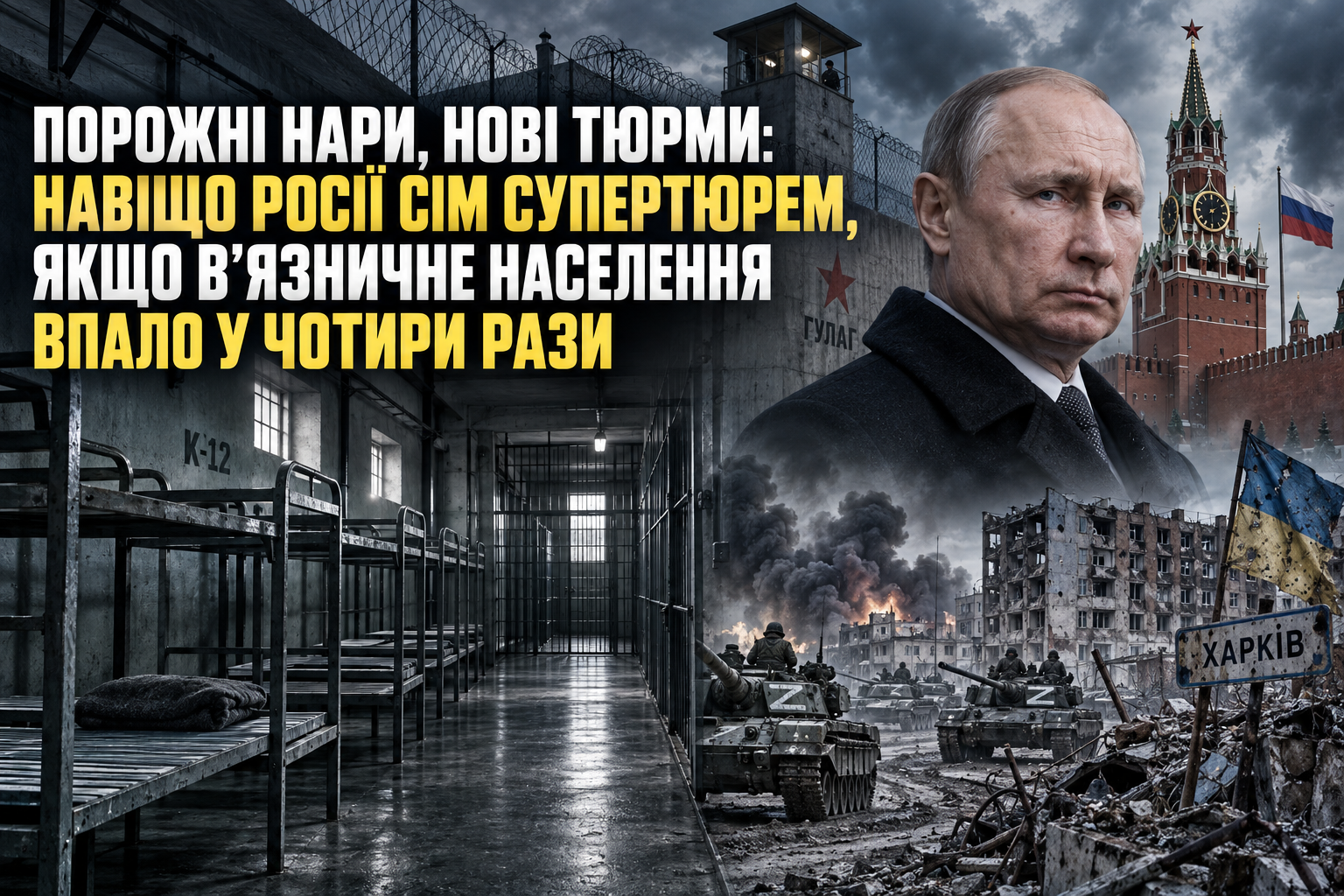
Accordingly, the Russian prison system has proven to be much more necessary and more instrumental than it was during Stalin’s rule. On the one hand, the prison system is extremely necessary for intimidating its own population. On the other hand, the prison system is a constant source of soldiers who, in terms of their status, are little different from slaves. To create slave soldiers, an extremely repressive state apparatus of criminal justice is needed, which punishes citizens with imprisonment even for isolated pickets and peaceful protests, reposts on social networks or singing songs, for which the prison system is an instrumentally useful appendage.
And this is where the criminal and prison subculture, which in modern Russia plays the role of a social cement, becomes particularly important. With its characteristic and established language, preserved for centuries, it unites citizens in society – students and teachers, parents and children, soldiers and commanders on the fronts of Russia’s neocolonial wars, prisoners and prison staff. With its Imperial penal and prison origins, it is no longer perceived in the context of its historical background but is instead used as a modern product.
We call all this the Wagner phenomenon, which is based on the name of the private military company ‘Wagner’ – a Russian non-state illegal armed group created by entrepreneur Yevgeny Prigozhin, which has the status of a terrorist organisation in a number of countries.
Since July 2022, numerous media outlets have reported on visits to Russian prisons by a man with the Hero of Russia star, resembling Yevgeny Prigozhin. According to these reports, he began a recruitment tour of colonies for former law enforcement officers and then moved on to Russian maximum-security prisons. He offered prisoners the opportunity to take part in combat operations in Ukraine as part of the Wagner private military company in exchange for a pardon, expungement of their criminal records, Russian passports and cash payments. In September 2022, a video appeared confirming Prigozhin’s personal recruitment of prisoners, filmed in maximum security colony No. 6 in Mari El.
In June 2023, there was a mutiny by fighters of the Wagner private military company. On 23 June 2023, Prigozhin announced that the Russian military had launched a missile strike on the rear camps of the Wagner private military company. In the evening of the same day, Yevgeny Prigozhin announced that he was going to carry out a ‘march of justice’, denying a military coup. During the mutiny, mercenaries from the Wagner private military company, meeting no resistance, took control of Rostov-on-Don, entering the city in tanks, among other vehicles, then passed through the Voronezh and Lipetsk regions with minimal resistance during the day, heading for Moscow, shooting down one Russian army aircraft and six helicopters. A counter-terrorism operation was declared in several regions, including Moscow. However, on 23 August 2023, Yevgeny Prigozhin died in a plane crash in the Tver region.
In the context of the issues we are investigating, it is necessary to highlight several important aspects that, at first glance, may seem unrelated.
These aspects are: 1) the very fact of the creation and successful existence of this de facto military order, which directly influences Russia’s foreign and domestic policy; 2) involvement of this military order in the mass recruitment of prisoners from Russian prisons to participate in the war against Ukraine; 3) importation of prison subculture by this military order.
All these facts need to be analysed together with the factor of mass support for the 2023 uprising by the local population, as well as the nationwide trend of filling the Russian army with prisoners or forcibly mobilised individuals, even without the participation of the Wagner private military company or similar structures, since the State itself has openly taken on this initiative.
As far as conclusions can be drawn from various sources, the modern Russian army, which is carrying out the armed aggression against Ukraine, is built entirely on informal prison laws. It has the same prison language, the same hierarchy with ‘blatny’ and ‘opushchenny’, withthe same ‘concepts’. Modern Russia is the most radical example of a prison state, not because it has many prisons and many prisoners, especially since the number of prisoners in Russia has significantly decreased due to mass mobilisation. Modern Russia is the most radical example of a prison state because both the army and society function according to the informal prison laws formed over the last five centuries.
In this context of Russian criminal and prison culture, the 2023 mutiny of the private military company Wagner was a modern-day uprising of Stepan Razin or Yemelyan Pugachev – an uprising against the authorities, not against the tsar, but with faith in the tsar. However, unlike the large-scale Russian rebellions of past centuries, which were uprisings of relatively free people, this rebellion by Wagner mercenaries demonstrated that it was a revolt by people who consciously live by the informal laws of Russian prisons, which seem completely natural and comfortable to them.
Taking the above into account, we can conclude that the modern Russian prison state is not about the number of prisons, the number of prisoners, or the number of prison staff. It is about the Russian population’s acceptance and internal perception of the idea that the State should be governed by informal prison norms. In this Prison State, a minority plays the role of prison guards, a second, sufficiently large group of citizens should be imprisoned, but the rest of the citizens are only ‘temporarily and conditionally released’.
That is why the criminal and prison subculture is one of the most important instruments of Russian neocolonial policy, both domestic and foreign. The official formal authorities of Russia cannot help but use these channels of penetration into Ukrainian ‘territory’ – in the broadest sense – to further support its post-colonial policy, which is becoming increasingly unsuccessful considering the European and Euro-Atlantic vector of development of Ukrainian society, finally formed after another armed attack by Russia on Ukraine.
Conclusions
We can conclude that Russian criminal and prison subculture had developed within the aggressive Russian colonial policy starting from 16th century.
In the 17th century, the policy of carceral colonization changed dramatically: criminal offenders, fugitives, and peasants rejected by their communities began to be exiled to Siberia, including the lands near Lake Baikal. During this period, exile came to be seen more as a punitive measure, with the problems of settlement and development of the territory also being considered, but to a much lesser extent. Criminal exiles did not settle well in their new homes, did not engage in agriculture, and their presence only increased crime. During this period, exile had no significant impact on the region’s economy. The presence of a large contingent of criminal elements effected negatively on the moral state of society as a whole.
By the early 1860s, the Russian criminal and prison subculture had finally developed in all prisons of the Russian Empire, especially all Siberian and, later, Sakhalin prisons.
The prisoner community as an organised structure with self-government, its own primitive ‘legislation’, stratification (division of the general mass of prisoners into certain ‘classes’), rudimentary governing bodies, and economic levers in the form of a common ‘pot’, was a kind of precursor to the emergence of organised crime in the Soviet and post-Soviet periods.
The Russian criminal and prison subculture remained almost unchanged until the beginning of the Soviet period, when it was transformed to meet the needs of Stalinist industrialisation. In the context of evolution of the Russian criminal and prison subculture, the first element of this subculture was a system of hierarchical relations that clearly defined the place and role of each prisoner, endowing them with a corresponding informal status, which was much more important to the prisoners themselves than their formal status.
The elite of the Russian prison world in the second half of the 19th century, its ruling class, consisted of ‘vagrants’ and criminal authorities known as ‘the Ivans’. They commanded the Russian prison community that existed across the vast expanses of the Russian Empire. The ‘Ivans’ and ‘vagrants’ became the prototypes of the future ‘thieves-in-law’, whose power in the criminal world of places of deprivation of liberty eventually became virtually unlimited.
At the same time, it was only within the prisoner community that prisoners could realise themselves as full members of society, receive support from their ‘brothers’ and, in numerous instances, even have a guarantee of survival in the harsh and often inhuman conditions of Russian prisons. Despite the fact that the prisoner community actively opposed formal prison rules and the very purpose of prison, the community model of prisoner self-government was supported and approved by the prison administration, given the meagre number of prison staff in Russia at the time, its high level of corruption and direct involvement in criminal activities of the prisoner communities, such as counterfeiting money.
At the same time, delegating power to ‘the vagrants’ and ‘the Ivans’ became so attractive to the prison administration that it not only took root in the prison system of the Russian Empire, but was also ‘inherited’ by the Soviet Union, where it was further developed. Similarly, the practice of delegating power in prisons to informal prisoner leaders has persisted in post-Soviet countries, which today is rightly considered a prerequisite for inter-prisoner violence and torture of prisoners by informal leaders and their ‘subordinates’. It can be confidently asserted that the phenomenon with which the European Committee for the Prevention of Torture is currently struggling has not a Soviet but a Russian imperial basis.
The representation of prison subculture found wide reflection even in Soviet literature. One can recall Valentin Pikul’s ‘Katorga’, where, rejecting the author’s chauvinistic and imperialist accents, one can form a clear picture of the existence of a deeply rooted informal hierarchy in Russian penal colonies, and, most importantly, of the deep immersion of state agents in subcultural prison norms, as well as the facilitation by state agents of the spread of subcultural power among the general prison population.
Examples and analysis of crime in Siberia reinforced the idea among publicists of the corrupting influence of exile on the indigenous population and the existence of a special criminal atmosphere. The phenomenon of vagrancy stood out for the authors of the public discourse as the most widespread deviation among exiles. The focus was on statistical data on the number of escapes, the psychology of vagrants, and their routes of movement. Vagrancy in public discourse was interpreted from the perspective of European theories of cultural and social development and was a factor that made it impossible to classify Russia as ‘civilised’ country. The analysis of the endless movement of vagrants complemented the image of criminal exile with metaphors of the cyclical nature and mobility of the Siberian population and the absence of stable social ties. The failure of the colonisation and punitive potential of exile was part of society’s perceptions.
An important element of Russian criminal and prison criminal jargon – the so-called ‘Blatnoi yazyk’, ‘Fenya’ or ‘Blatnaya muzyka’ – had a significant impact and continues to influence Russian society. ‘Blatnoi yazyk’ was not only an accessible means of communication for prisoners who belonged to the elite of the Russian criminal world and the top of the informal prisoner hierarchy, but also a symbol of their verbal, moral and ideological affiliation with the ‘world of hard labour’. In addition, mastery of ‘Blatnoi yazyk’ was one of the main tools of socialisation in the criminal environment and of career advancement in informal criminal and prison hierarchies.
The third integral element of interpersonal relations became card games. Its main purpose was entertainment, and the result was ‘enrichment’ or impoverishment (losers lost everything – money, rations, clothes, wives, children).
The fourth symbol of subcultural relations became Russian penal songwriting, which was amalgamated into the national creative output of Russian society.
Overall, in order to analyse the preconditions for the emergence of the Russian criminal and prison subculture, its successful preservation during the Soviet period, its spreading in post-Soviet countries, and its current transportation to post-Soviet countries by Russian political elites, it is necessary to consider a large complex of historical, cultural, political, geographical, and economic factors, which together created a phenomenon that had no analogues in the history. Neither the deportation of white criminals by the British government to the New World in the 17th century, nor the deportation of convicts by the British government to Australia in the 19th century, nor the deportation of dangerous criminals (relégués) to French Guiana and other colonies in the 19th and 20th centuries created the cultural-criminal-prison phenomenon that began to take shape during the time of the Grand Duchy of Moscow. Later, it was significantly strengthened during the reign of Peter I and finally took shape in the second half of the 19th century. Moreover, it should also be noted that World’s history provides no other examples of state formations such as the Vyatka Republic of the 14th-15th centuries, which was founded by professional criminals and whose economic base was founded on professional and organised criminal activity.
Moreover, multiplied by the phenomenon of the Soviet Gulag, the Russian colonial-penal-carceral political complex created a new phenomenon, which, as it turned out, is very useful for modern Russian imperialist policy in terms of providing an uninterrupted source of recruits for military operations in the war against Ukraine in the 21st century (the Wagner phenomenon).
In order to analyse the contemporary phenomenon of the post-Soviet criminal and prison subculture and its importation by the modern Russian political elites, limitation of the scientific research only to the period after 1917 is a fundamental methodological mistake. Such a mistake makes it impossible to study the real preconditions of the simulacrum of the contemporary Russian criminal and prison subculture, which, we emphasise, has lost the prefix ‘sub’ and has become a national criminal and prison culture.
Sources:
1. Arkhipov, S., Shkabin, G. (2021). Organisational and legal problems of penal colonisation of Siberia and the Far East in the 19th century. Bulletin of the Volgograd Academy of the Ministry of Internal Affairs of Russia. 4 (59). P.156-164.
2. European Committee for the Prevention of Torture and Inhuman or Degrading Treatment or Punishment (2025). The Council of Europe anti-torture Committee (CPT) calls for action to combat prison overcrowding and informal hierarchies in prisons. The Committee for the Prevention of Torture and Inhuman or Degrading Treatment or Punishment. April 24, 2025. Source: www.coe.int/en/web/cpt/-/the-council-of-europe-anti-torture-committee-cpt-calls-for-action-to-combat-prison-overcrowding-and-informal-hierarchies-in-prisons
3. European Committee for the Prevention of Torture and Inhuman or Degrading Treatment or Punishment (2025). Informal Prisoner Hierarchy Prison Standard. CPT/Inf (2025). Council of Europe. Strasbourg. 24 p.
Поділіться цим вмістом: